The 10 Largest Islands in the World
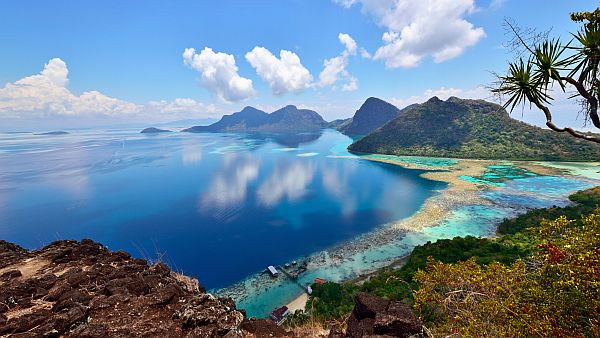
What is an island? It’s a land mass surrounded by water… usually. A sandbar is land, mostly sand, formed by waves. A continent, like Australia, is generally the primary land on a gigantic tectonic plate. Islands are in-between: land and not just piles of sand, but on a smaller-than-global scale.
Greenland is the largest island in the world. Almost 80 percent of the land is covered with ice… but while the ice-free part may only be 20 percent of the land, that part is still around the size of Sweden. It’s one of the least densely populated countries in the world and there are, surprisingly, no roads to connect one town with another. Its name was given by Erik The Red, who was exiled to the island. He called it “Greenland,” hoping the name would attract settlers. Greenlanders typically speak both Danish and Greenlandic, from which we borrow words like kayak and igloo.
These islands are ranked by approximate land area, measured in square miles and square kilometers.
- Greenland: 836,330 mi² (2,166,086 km²)
- New Guinea: 303,381 mi² (785,753 km²)
- Borneo: 288,869 mi² (748,168 km²)
- Madagascar: 226,917 mi² (587,713 km²)
- Baffin Island: 195,928 mi² (507,451 km²)
- Sumatra: 182,812 mi² (473,481 km²)
- Honshu: 87,992 mi² (227,898 km²)
- Victoria Island: 83,897 mi² (217,291 km²)
- Great Britain: 80,823 mi² (209,331 km²)
- Ellesmere Island: 75,767 mi² (196,236 km²)